Your Rep Agreement Needs an AI Clause Yesterday
Stop pretending you're not using AI. Your clients deserve to know, and your bar association is watching. Here's exactly what to add to your engagement letters.
Graydon Trusler
Lexpert FounderJanuary 12, 2025
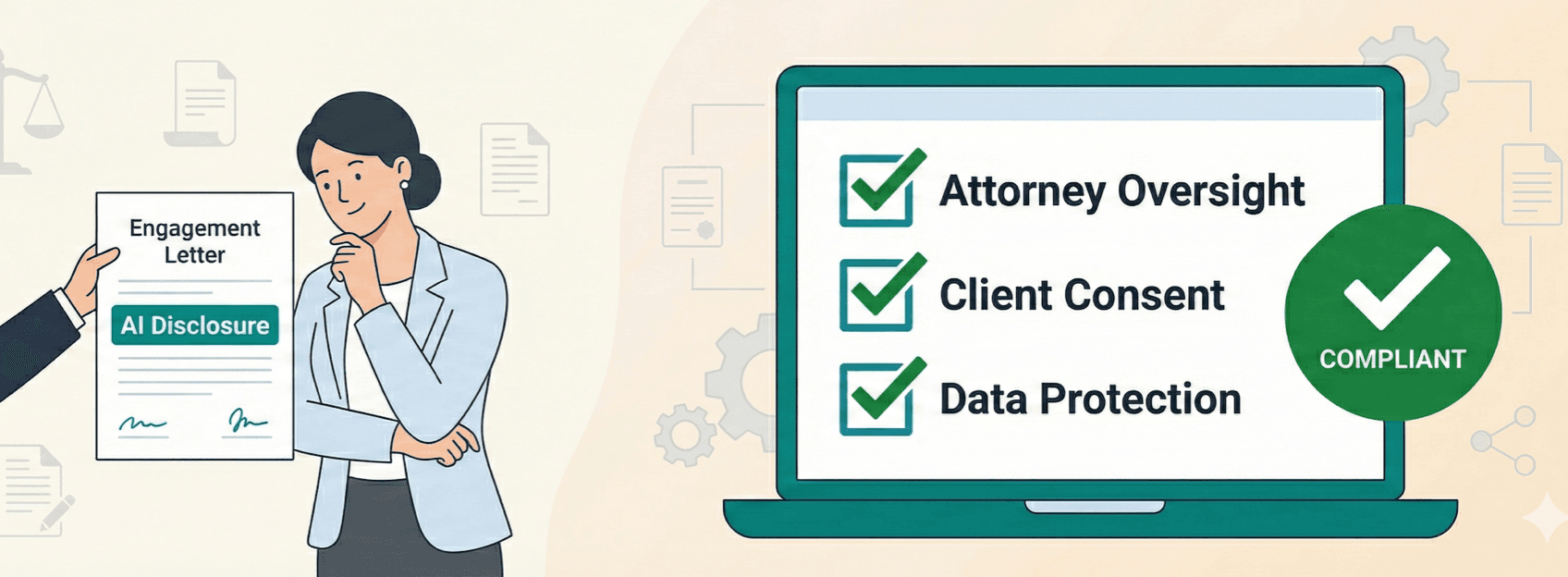
Stop pretending you're not using AI. Your clients deserve to know, and your bar association is watching.
The Reality Check
You're already using AI. Time to admit it. Whether it's ChatGPT for research, Claude for document review, or CoCounsel for brief drafting - you're using AI tools. Hiding it isn't clever, it's malpractice waiting to happen.
Here's what keeps lawyers up at night: Their state bar releases new AI ethics guidelines while they're sitting on 200 active matters with zero AI disclosure. That's not a hypothetical. That's happening right now in firms across the country.
The good news: Fixing this takes 20 minutes, not 20 hours. The bad news: Every day you wait makes the conversation with existing clients more awkward.
What Actually Goes in Your Agreement
The Bare Minimum Disclosure
Stop overthinking. Here's what you need:
"Use of Technology and AI Tools. Our firm uses various technology tools to improve efficiency and quality of legal services, including artificial intelligence systems for research, document drafting, and analysis. All AI-generated content is reviewed and verified by licensed attorneys. No confidential client information is shared with third-party AI systems without appropriate safeguards. You have the right to opt out of AI-assisted work on your matter."
That's it. That covers you and respects your client.
The Better Version (If You Want to Build Trust)
"How We Use AI to Serve You Better. We use AI tools like [specific tools] to:
- Research case law faster and more thoroughly
- Review documents for issues humans might miss
- Draft initial versions of standard documents
- Analyze contracts and identify key terms
What we DON'T do with AI:
- Make legal decisions (that's always human)
- Share your confidential information with public AI systems
- Bill you for time saved by AI without disclosure
- Rely on AI output without attorney review
Your rights: You can opt out of AI use on your matter entirely, request disclosure of specific AI use, or ask questions about our AI practices anytime."
Notice the difference? One covers liability. The other builds confidence.
Dealing with Current Clients
The Addendum Nobody Wants to Send
You've been using AI for months. Now you need to tell 200 existing clients. Here's the approach that actually works:
Subject: Important Update: How Technology Improves Your Legal Service
Not: "Required AI Disclosure Notice" (sounds like you did something wrong) Not: "Exciting News About Our Firm!" (they don't care)
The Message:
"We're updating our engagement terms to reflect how we use technology, including AI tools, to deliver better legal service.
What this means for you:
- Faster research and document review
- More thorough issue spotting
- Same attorney oversight and accountability
What doesn't change:
- Your confidentiality protections
- Attorney review of all work
- Our ethical obligations
Action needed: Review the attached addendum. No signature required unless you want to opt out of AI-assisted work.
Questions? Call me directly at [number]."
The Script for the Nervous Client
They call. They're worried. Here's your response:
"I get it. Here's what AI actually does in our practice: It's like having a really smart law clerk who never sleeps. It finds cases I might miss, spots patterns in contracts, and drafts the boring parts of documents. But just like with a law clerk, I review everything. The difference is AI makes me faster and more thorough, which saves you money."
If they push back: "You can absolutely opt out. It'll take longer and cost more, but some clients prefer that. Your choice."
The Billing Question Everyone Avoids
Stop dancing around this: If AI drafts a motion in 30 minutes that would've taken you 3 hours, what do you bill?
The Wrong Approach:
- Bill 3 hours anyway (that's fraud)
- Bill 30 minutes (that's a mistake)
- Avoid AI to avoid the question (that's fear)
The Right Approach:
Add this to your agreement:
"Technology-Assisted Work: When we use AI or other technology to complete work faster, we bill for the actual time spent plus the value provided. For example, if AI helps us draft a document in 1 hour that traditionally takes 4 hours, we may bill 1.5-2 hours reflecting both time saved and expertise required to properly direct and review the AI's work."
Be transparent. Clients respect honesty more than they resent fees.
State-Specific Landmines
California
The State Bar's generative-AI guidance leans toward informed consent, especially where client confidential information is involved. That means explaining risks, not just mentioning AI exists. Add a specific risk disclosure paragraph.
Florida
Ethics opinion suggests disclosure when AI "materially affects" representation. Define what you consider "material" in your agreement.
New York
Focused on competence and confidentiality. Emphasize your AI training and security measures.
Texas
No specific rules yet, but the bar is watching. Get ahead of it now.
Don't know your state's position? Add this safety valve: "Our use of AI tools complies with all applicable ethical rules and bar opinions in [State]."
The Conversations That Suck (And How to Have Them)
"Why didn't you tell me before?"
"These tools evolved faster than regulations. We're updating all our agreements to reflect current best practices. You're getting this notice as part of that process."
"I don't trust AI with my case."
"Perfect. You can opt out. It means things take longer and cost more, but you're the client. Your comfort matters more than our efficiency."
"Are you charging me for robot work?"
"We charge for attorney work - reviewing, analyzing, and applying legal judgment. AI helps us do that work better and faster. You're paying for results and expertise, not just time."
"What if AI makes a mistake?"
"Same thing that happens if I make a mistake - I'm responsible. My malpractice insurance covers AI-assisted work. The buck stops with me, not the machine."
Implementation: Do This Today
Step 1: Update Your Template (10 minutes)
Copy one of the clauses above. Paste it into your standard engagement letter. Save it. Done.
Step 2: Email Current Clients (5 minutes)
Use the template email above. Attach a simple addendum. Send it. Stop overthinking.
Step 3: Update Your Website (5 minutes)
Add one line to your footer: "We use secure AI tools to enhance our legal services." Link to a page explaining your approach if you want. Or don't. Just acknowledge it somewhere.
Step 4: Train Your Team (0 minutes)
Send them this article. Tell them to read it. Answer questions as they come up.
The Bottom Line
Every lawyer using AI without disclosure is building a house of cards. One bar complaint, one suspicious client, one ethics opinion - and suddenly you're explaining to the disciplinary committee why you thought hiding AI use was fine.
This isn't about being cutting-edge or tech-forward. It's about not being the lawyer who gets made an example of when your state bar decides to crack down.
Update your agreements. Send the addendum. Have the awkward conversations. Because the only thing worse than an uncomfortable disclosure is an ethical violation that could've been prevented with a paragraph of text.
Stop reading. Start updating. Your engagement letter template is waiting, and every new client you sign without an AI clause is another conversation you'll have to have later.
The Copy-Paste Section
Stop crafting. Start copying:
For your engagement letter: "Our firm uses AI and other technology tools to enhance legal services. All AI output is reviewed by attorneys. Confidential information is protected. You may opt out of AI assistance."
For your addendum email: "We're updating our engagement terms to reflect our use of technology tools, including AI. No action needed unless you want to opt out. Questions? Call me."
For your website: "We responsibly use AI tools to deliver better, faster legal services while maintaining full attorney oversight."
Done. You're now ahead of most lawyers on this. Was that so hard?
The Obvious Disclaimer
I'm not your lawyer. I'm not even a lawyer. This isn't legal advice - it's practical advice from someone who watches lawyers struggle with AI adoption daily.
If you're an attorney reading this, you know what to do: Apply your own legal judgment. Check your state's specific rules. Maybe run this by your ethics counsel if you're at a big firm.
If you're not an attorney but somehow ended up here, find one. This stuff matters too much to wing it based on an article from a non-lawyer who just happens to know what actually works in practice.
Built by lawyers, for lawyers.
LexpertAI delivers practical AI strategies that practicing attorneys can implement today. No theory, no fluff, just results.
Read our storyWant more practical AI guidance?
Get actionable tips and strategies delivered weekly. No theory, just real-world implementation.
Read The Playbook