The AI Postmortem: How to Actually Get Better After Every Session
Most people close the chat and move on. Smart users spend 5 minutes asking 'what could we have done better?' That simple habit is what separates AI amateurs from experts.
Graydon Trusler
Lexpert Founder
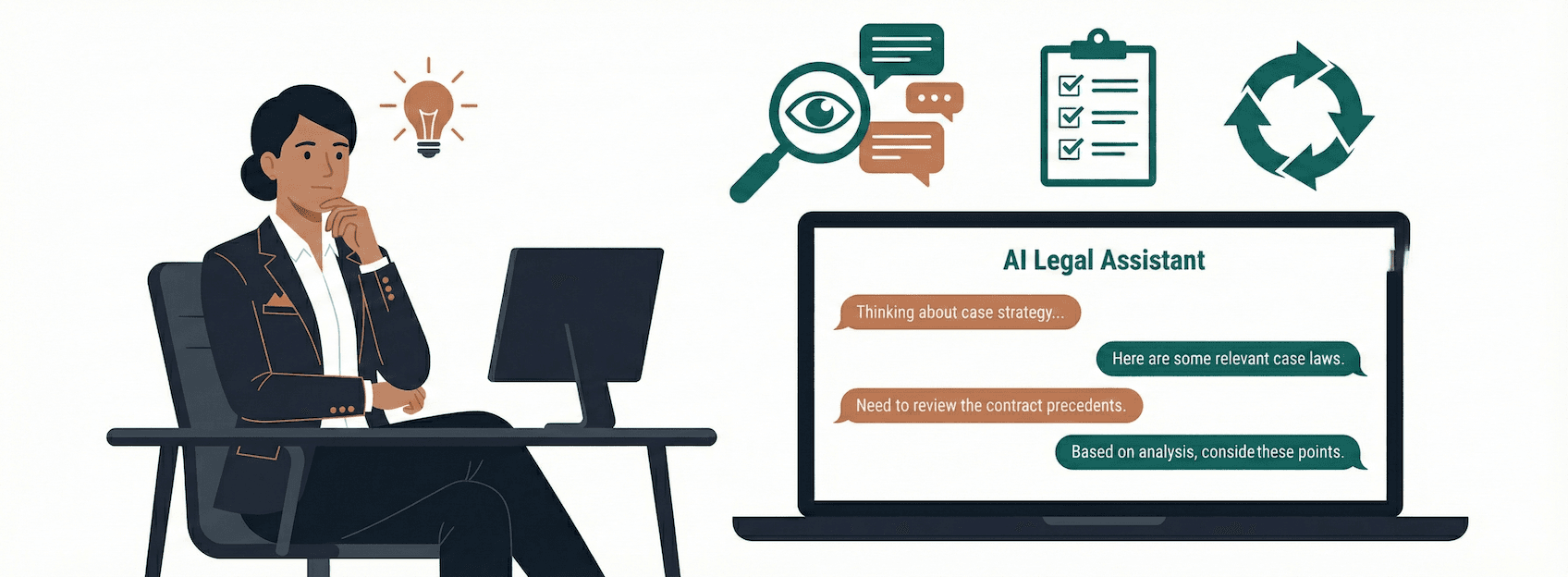
You just finished a 45-minute AI session. You got what you needed. You close the tab.
Congratulations. You just threw away the most valuable part.
The Learning Gap Nobody Talks About
Here's something weird: People will spend hours learning AI prompting techniques from courses and YouTube videos, but they won't spend 5 minutes reviewing what actually happened in their own sessions.
That's like reading books about golf swings while never watching your own footage.
Every AI session is a lesson you're ignoring. The conversation you just had contains everything you need to get better - if you bother to look at it.
What Is an AI Postmortem?
Simple. Before you close that chat, ask:
- What worked?
- What didn't?
- What took way too long?
- Where did we go in circles?
- What prompt or approach would have gotten me here faster?
That's it. Five questions. Two minutes. Done.
But here's the real power move: Ask the AI to do the postmortem with you.
The 5-Minute Postmortem Protocol
When you've finished your task but before you close the session, paste this:
"Before we end, let's do a quick postmortem on this conversation. Looking back at our entire exchange:
- What worked well in how I prompted you?
- What caused unnecessary back-and-forth or confusion?
- What context or information should I have given you upfront?
- If I had to do this exact task again, what's the ideal prompt I should have started with?
- What did you have to infer or assume that I should have stated explicitly?"
You will be shocked at what you learn.
The AI remembers every stumble, every clarification it had to ask for, every time you said "no, that's not what I meant." It can tell you exactly where things went sideways and why.
Real Example: A Document Review Gone Wrong
Let me show you what a postmortem reveals.
The task: Review a 20-page contract for potential issues.
What happened: 45 minutes of back-and-forth. AI kept summarizing instead of analyzing. Kept missing the specific issues I cared about. Had to re-explain what I wanted four times.
What the postmortem revealed:
- I never told AI what kind of issues I was looking for (liability? IP? termination clauses?)
- I never specified my client's position (are we the vendor or the customer?)
- I uploaded the document but didn't explain the business context
- I asked for "problems" when I should have asked for "risks for [specific party] given [specific situation]"
The ideal starting prompt would have been:
"You're helping me review a software licensing agreement. My client is the licensee (buyer). They're a mid-size law firm buying case management software. I need you to identify: (1) liability exposure, especially indemnification imbalances, (2) termination provisions that could leave us locked in, (3) IP ownership issues around our data, and (4) anything that conflicts with our standard vendor requirements [paste requirements]. Flag severity as high/medium/low. Start with section 4 (Liability) and let's go section by section."
That prompt would have saved 30 minutes. And I only know that because I did the postmortem.
Why You Keep Making the Same Mistakes
Without postmortems, you're stuck in a loop:
- Struggle through an AI session
- Eventually get something usable
- Close the chat
- Repeat the same struggle next time
You're not building skill. You're just surviving.
The lawyers who seem "naturally good" at AI aren't natural at all. They just actually think about what they're doing. They notice patterns. They iterate.
Postmortems turn random experience into actual learning.
The Patterns You'll Start to Notice
After a few postmortems, you'll spot your own bad habits:
The Vague Opener: You start with "Help me with this contract" instead of specifying exactly what help looks like.
The Missing Context: You assume AI knows things it can't possibly know - your client's goals, your firm's preferences, the backstory.
The Assumption Spiral: You let AI make assumptions instead of stating facts, then spend 20 minutes correcting course.
The Format Failure: You wanted a table but got paragraphs. You wanted bullet points but got an essay. You never said what you wanted.
The Scope Creep: You started with one question and kept piling on, confusing the AI about what actually mattered.
Once you see your patterns, you can fix them. You can't fix what you don't notice.
Advanced: Build Your Own Prompt Library
Here's what smart users do: When the postmortem reveals an "ideal starting prompt," save it.
Create a document called "AI Prompts That Actually Work" and start collecting:
- Contract review prompt (specify party, concern areas, format)
- Research memo prompt (specify depth, sources, counterarguments)
- Client email prompt (specify tone, relationship history, goal)
- Discovery analysis prompt (specify what you're looking for, case theory)
After 20 postmortems, you'll have a playbook. You'll stop reinventing the wheel every session. You'll start with prompts that already work.
This is how you go from "figuring it out every time" to "being efficient every time."
The Meta-Postmortem: Reviewing Your Reviews
Once a month, look at your last 10 postmortems and ask:
- What mistakes keep repeating?
- What types of tasks still give me trouble?
- What have I actually gotten better at?
- What should I focus on improving next?
This is how you compound your learning. Most people stay stuck at "intermediate" forever because they never step back and look at the bigger picture.
The Uncomfortable Part
Postmortems reveal an uncomfortable truth: Most of your AI frustrations are self-inflicted.
The AI didn't fail to read your mind - you failed to express your thoughts clearly.
The AI didn't waste your time with wrong answers - you asked imprecise questions.
The AI didn't misunderstand the task - you didn't define the task well enough.
That stings. But it's also good news. Because if the problem is you, you can fix it. If the problem were the AI, you'd just be stuck.
What a Postmortem Actually Sounds Like
Here's a real postmortem conversation:
You: "Before we end, what would have made this session more efficient?"
AI: "Three things would have helped significantly:
-
Upfront context about the case posture - I didn't know until halfway through that this was for an appeal, which changed everything about how to frame the arguments.
-
Your actual thesis stated early - You had me generate options when you already knew what argument you wanted to make. If you'd said 'I want to argue X, help me build support' instead of 'what arguments could work,' we'd have saved 15 minutes.
-
The format you needed - I wrote narrative analysis when you needed a structured outline for your brief. Knowing the end product upfront would have shaped everything."
You: "What should my opening prompt have been?"
AI: "Something like: 'I'm writing an appellate brief arguing [specific position]. I need a structured outline with main arguments and supporting points. The key facts are [X]. The lower court ruled [Y]. My theory is [Z]. Give me an outline I can build from, not a full draft.'"
That's learning. That's how you get better.
Stop Closing the Tab
Every AI session has two products:
- The thing you made
- The lesson about how to make it better next time
Most people only take the first one. Don't be most people.
The 5-minute postmortem is the highest-leverage habit you can build. It turns every session into training. It compounds your skill over time. It stops you from making the same mistakes forever.
Next time you finish an AI task, resist the urge to close immediately. Ask: "What did we learn here?"
You'll be shocked at the answer.
Try this today: Go back to your last substantive AI conversation (if your tool saves history) and ask for a postmortem. Or on your next session, end with the postmortem protocol above. Do it once. See what you learn. Then decide if it's worth the 5 minutes.
It is.
Built by lawyers, for lawyers.
LexpertAI delivers practical AI strategies that practicing attorneys can implement today. No theory, no fluff, just results.
Read our storyWant more practical AI guidance?
Get actionable tips and strategies delivered weekly. No theory, just real-world implementation.
Read The Playbook