Document Drafting Prompts for Lawyers
13 AI prompts for drafting documents that don't sound like templates. Copy, paste, fill in your specifics, and get drafts that sound like you wrote them.
Graydon Trusler
Lexpert Founder
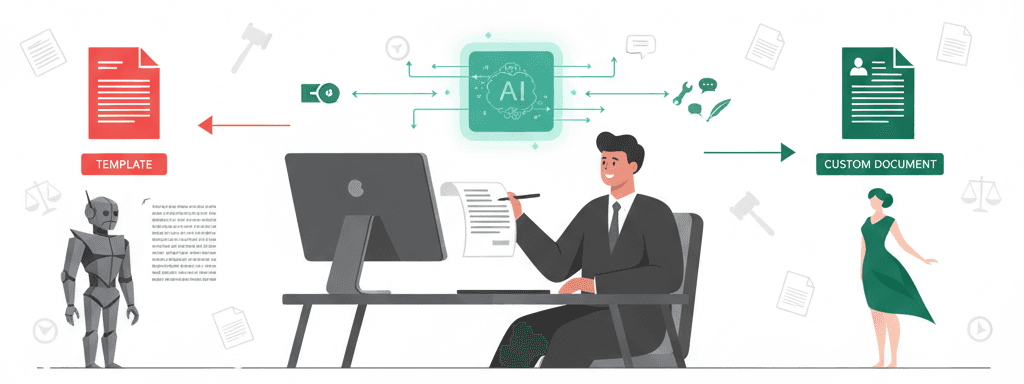
Copy these prompts when you're staring at a blank document. Fill in the brackets with your specifics. Let AI ask you questions first - that's when you get useful drafts instead of generic garbage.
Before you paste client facts
These prompts work best with real specifics, but never put privileged or client-identifying details into a consumer AI tool that trains on your inputs. Turn off training first (see the privacy guide), anonymize names and numbers, and verify every output before it leaves your office.
When You Need a Demand Letter That Doesn't Sound Like a Template
"I need to write a demand letter for [type of case] that sounds like an actual human wrote it, not like I downloaded it from LegalZoom.
The situation: [what happened - 3-4 sentences]
What we want: [specific demand]
The recipient: [who they are and why they should care]
The tone I need: [aggressive? professional? "this is your last chance"?]
What leverage we have: [why they should pay attention]
Ask me: What's their most likely objection? What happens if they ignore this? Then draft a demand letter that sounds like me, not like a form."
Why this works: Gets you to think about their perspective, forces specificity about leverage, creates something that sounds human.
When You Need the "Findings of Fact" Section But Your Brain Is Mush
"I need to draft findings of fact for [motion/decree/order] and I have all the facts but my brain won't organize them into coherent numbered paragraphs.
The facts I need to establish: [dump everything relevant]
What legal standard these facts need to support: [the test/factors]
The story these facts tell: [your narrative in 2-3 sentences]
The format required: [numbered paragraphs? specific sections?]
Ask me which facts are disputed vs. undisputed, then organize these into findings that build toward my legal conclusion. Make them specific enough to be useful but not argumentative."
Why this works: Separates fact-gathering from organization, focuses on the legal standard, maintains the neutral tone findings need.
When You're Writing a Motion and the Introduction Needs to Hit Hard
"I'm writing a [type of motion] and need an introduction that makes the judge want to rule for me in the first two paragraphs.
What I'm asking for: [the relief]
Why it's obvious I should win: [your strongest point]
The key facts: [the 3-4 facts that matter most]
What the other side will argue: [their position]
This judge's pet peeves: [anything relevant about the judge]
Ask me: What's the one thing that would make the judge mad if they knew it? Then write an introduction that leads with that and frames everything else."
Why this works: Forces you to identify your strongest point, front-loads what matters, tailors to the specific judge.
When You Need to Turn Legal Analysis Into Something a Client Will Actually Read
"I need to explain [legal issue/case analysis] to my client in a way that's accurate but doesn't sound like I'm writing a brief.
The legal issue: [what you're analyzing]
The conclusion: [bottom line]
The complicating factors: [what makes this not simple]
What they're worried about specifically: [their fear]
Their level of legal sophistication: [how much they know]
Ask me what bad thing they think will happen if I'm wrong. Then explain this in a way that's legally accurate but uses their language, not mine."
Why this works: Centers on their actual concern, matches their sophistication level, maintains accuracy without jargon.
When You Need a Client Engagement Letter They Won't Just Sign Without Reading
"I need an engagement letter for [type of case] that actually explains what I will and won't do, in a way that prevents problems later.
Scope of work: [what you're doing]
What's NOT included: [common misunderstandings to prevent]
The fee structure: [how you're billing]
What you need from them: [their responsibilities]
Common problems in these cases: [what usually goes wrong]
Ask me what clients in these cases always complain about later. Then draft an engagement letter that sets clear expectations about those specific issues."
Why this works: Prevents future disputes by addressing common misunderstandings upfront, uses plain language, focuses on mutual responsibilities.
When You're Responding to Discovery and Need to Object Without Sounding Obstructive
"I need to respond to [type of discovery] that's [overbroad/vague/harassing] but I can't just say 'objection' 30 times without looking like I'm hiding something.
The requests: [the problematic ones]
Why they're improper: [legal basis]
What I'm willing to produce: [reasonable alternative]
The judge's reputation: [how they handle discovery disputes]
Our cooperation so far: [context]
Ask me: Which of these objections are hills worth dying on? Then draft responses that assert my objections but show I'm being reasonable."
Why this works: Distinguishes real objections from nitpicking, shows good faith, positions you well for a discovery dispute.
When You Need to Draft Settlement Language That Covers Your Ass
"We've agreed on settlement terms for [type of case] and I need to draft language that actually protects my client from [specific risk].
What we agreed to: [the deal terms]
What could go wrong: [your concern]
What the other side will accept: [their flexibility]
What's standard in these cases: [boilerplate that applies]
What's unique here: [why standard language isn't enough]
Ask me: What's the worst case scenario if this language is vague? Then draft provisions that close that loophole without killing the deal."
Why this works: Focuses on specific risks not generic concerns, balances protection with practicality, thinks ahead to enforcement.
When You're Writing an Opposition Brief and Their Argument Is Just Bad
"I'm opposing [type of motion] and their argument is [weak/wrong/irrelevant] but I need to respond seriously without sounding condescending.
Their argument: [what they're claiming]
Why it's wrong: [the legal/factual problems]
The cases they're relying on: [their authority]
What they're ignoring: [inconvenient facts/law]
The standard of review: [what lens the judge applies]
Ask me: Is their argument so bad I should barely respond, or do I need to kill it thoroughly? Then draft an opposition that's appropriately devastating."
Why this works: Calibrates your response to the threat level, avoids giving bad arguments more attention than they deserve, focuses on what matters to the judge.
When You Need to Write a Deposition Outline That Actually Finds the Gaps
"I'm deposing [witness type] and need an outline that doesn't just ask obvious questions but actually pins them down on [issue].
What this witness knows: [their knowledge]
What they'll try to avoid: [expected evasions]
What I need to establish: [specific admissions]
What documents they've seen: [exhibits to use]
Their relationship to the party: [credibility issues]
Ask me: What answer would hurt my case? How will they try to wiggle out? Then create an outline that boxes them in and closes the exits."
Why this works: Anticipates evasion, structures questions to prevent escape routes, focuses on what you need not what's interesting.
When You Need a Witness Prep Outline for Someone Who's Nervous
"I'm prepping [witness type] who's nervous about [deposition/testimony] and I need an outline that covers what they need to know without overwhelming them.
What they'll be asked about: [topics]
What they're nervous about: [their specific fears]
The traps they could fall into: [common mistakes]
What they need to establish: [key points]
Their communication style: [how they talk]
Ask me: What's the one thing they could say that would destroy our case? Then create a prep outline that focuses on avoiding that disaster while building their confidence."
Why this works: Prioritizes the critical issues, addresses their emotional state, prevents catastrophic errors while keeping them authentic.
When You're Drafting Interrogatory Answers and Need to Be Truthful But Strategic
"I need to answer interrogatories about [topic] truthfully but without volunteering information that hurts us.
The questions: [the ones you're worried about]
The truthful answer: [what actually happened]
What they're fishing for: [their goal]
What we'd rather not highlight: [the problem]
The supporting documents: [what they'll see anyway]
Ask me: What can they already prove from documents? Then draft answers that are completely honest but frame the facts in the least damaging way."
Why this works: Separates honesty from stupidity, focuses on what they can prove anyway, maintains credibility while being strategic.
When You Need to Draft Jury Instructions That Actually Favor Your Side
"I need to draft [type of instruction] that's legally correct but frames the issue in a way that helps my case.
The legal standard: [the law]
How the other side will frame it: [their version]
The fact that helps me: [what supports your framing]
The pattern instruction: [the starting point]
This judge's preferences: [how they handle instructions]
Ask me: What word choice makes the standard easier or harder for me to meet? Then draft an instruction that's accurate but favorable."
Why this works: Works within legal constraints while maximizing favorable framing, anticipates the other side's version, stays credible with the judge.
When You're Writing a Status Update Email That Won't Invite Micromanaging
"I need to update [client/judge/opposing counsel] about [case development] in a way that's informative but doesn't invite 50 follow-up questions.
What happened: [the development]
What it means: [significance]
What happens next: [next steps]
What you need from them: [if anything]
What questions they'll probably have: [anticipated concerns]
Ask me: What would make them panic or start second-guessing? Then draft an update that answers those questions preemptively so they don't spiral."
Why this works: Anticipates anxiety, provides context without over-explaining, sets expectations for next steps, maintains control.
The Pattern You'll Notice
Every one of these prompts:
- Names the specific document type (not "help me write something")
- Identifies the real challenge (not just "write a motion")
- Includes audience and context (judge's preferences, client sophistication, opposing counsel's style)
- Asks AI to question your assumptions first
The documents that work aren't the prettiest ones. They're the ones that accomplish your goal with your specific audience.
More prompts: Client Communication | Opposing Counsel
Built by lawyers, for lawyers.
LexpertAI delivers practical AI strategies that practicing attorneys can implement today. No theory, no fluff, just results.
Read our storyWant more practical AI guidance?
Get actionable tips and strategies delivered weekly. No theory, just real-world implementation.
Read The Playbook