Practice Management Prompts for Lawyers
10 AI prompts for running a law practice that doesn't run you. Delegating, pricing, hiring, marketing - the stuff they don't teach in law school.
Graydon Trusler
Lexpert FounderNovember 26, 2025
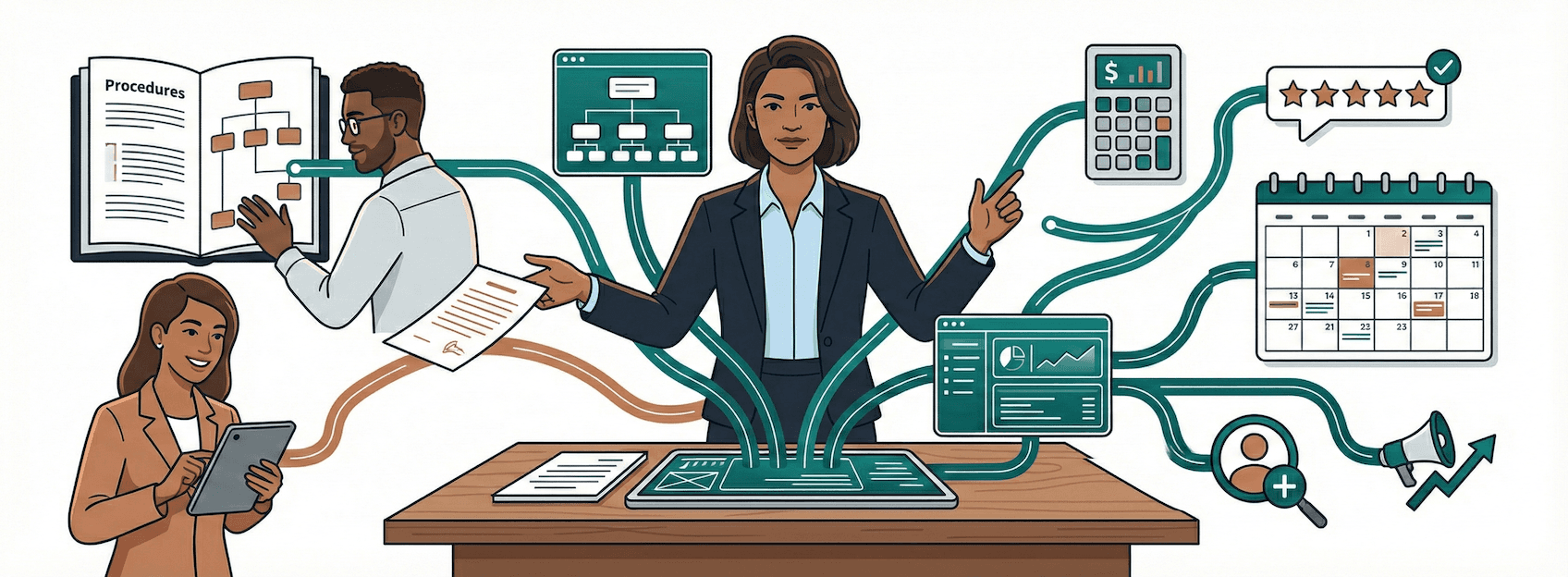
Copy these prompts when you're tired of reinventing the wheel. Fill in the brackets with your specifics. Let AI ask you questions first - that's when it stops being theory and starts being useful.
When You Need to Delegate to Junior Lawyers Without Redoing Their Work
"I need to delegate [task/project] to [junior lawyer] but I keep ending up redoing everything they touch. Help me create instructions that actually work.
The task: [what needs to be done]
Why I usually redo it: [where they go wrong]
What they already know: [their experience level]
The deadline: [when it's due]
What success looks like: [specific outcome]
Ask me: What am I assuming they know that they probably don't? What's the one thing that would make their draft unusable? Then help me write delegation instructions that prevent those problems upfront."
Why this works: Surfaces your hidden assumptions, focuses on common failure points, gives them clear success criteria instead of vague directions.
When You're Writing a Procedure So Staff Stops Asking the Same Questions
"My staff keeps asking me [repeated question] and I need to write a procedure once so I can stop explaining this every week.
The task they're doing: [the process]
What they keep getting wrong: [the problem]
Why they're confused: [the complexity/exception]
What they need to know: [required information]
When they should ask for help: [the escalation trigger]
Ask me: What question are they really asking when they ask me this? What's the decision point where they get stuck? Then write a procedure that addresses that specific confusion point."
Why this works: Identifies the real confusion point, creates decision trees not just steps, defines when to escalate instead of assuming they'll figure it out.
When You're Deciding Which Cases to Take
"I have a potential [type of case] and I need to think through whether this is actually a case I should take or just a client I like.
The case: [basic facts]
What they want: [client goals]
The legal issues: [complexity/problems]
Potential recovery: [money/outcome]
Time investment: [realistic estimate]
My capacity: [current workload]
Why I'm hesitating: [the red flag]
Why I want to take it: [the appeal]
Ask me: What would make me regret this case in 6 months? What am I not seeing because I need the work/like the client? Then give me an honest assessment based on the case, not my wishful thinking."
Why this works: Separates case quality from client appeal, checks your need-the-work bias, forces realistic time assessment.
When You're Pricing Consultations or Flat Fees
"I need to figure out pricing for [type of service] that's not too low but won't scare everyone away.
The service: [what you're offering]
Time it actually takes: [realistic hours]
Your hourly rate: [if you have one]
What competitors charge: [if you know]
Your market: [location/client type]
Your experience level: [how long you've done this]
What could go wrong: [scope creep risks]
Ask me: What's the worst case time commitment if this goes sideways? What would make me feel resentful about the fee? Then help me price this in a way that accounts for those risks."
Why this works: Prices based on worst case not best case, accounts for your resentment threshold, considers market reality.
When You're Writing Hiring Interview Questions That Actually Reveal Problems
"I'm hiring for [position] and need interview questions that will actually reveal if this person will drive me crazy or be a disaster.
The role: [what they'll do]
Skills they need: [technical requirements]
What went wrong with the last person: [previous problems]
Your work style: [how you operate]
Red flags you've missed before: [past hiring mistakes]
What you can't teach: [must-have qualities]
Ask me: What personality trait would make this hire a nightmare for me specifically? What do people say in interviews that sounds good but predicts failure? Then create questions that expose those issues."
Why this works: Learns from past mistakes, tests for compatibility with your style, asks behavioral questions that predict actual performance.
When You Need Marketing That Doesn't Make You Feel Gross
"I need to market [service/practice area] but everything I write sounds like every other lawyer or makes me feel like a used car salesman.
What I do: [your service]
Who needs it: [ideal client]
Why they need it now: [urgency/trigger]
What makes me different: [actual difference, not BS]
What I'm comfortable saying: [your boundaries]
Where they find lawyers: [channels]
Ask me: What do my best clients say about working with me? What problem do I solve that they didn't know they had? Then help me write marketing that sounds like me, not like marketing."
Why this works: Uses your actual client feedback, focuses on problems not credentials, stays within your comfort zone.
When You're Analyzing Practice Area Expansion
"I'm thinking about expanding into [new practice area] and need to think through whether this is smart or just shiny object syndrome.
The new area: [what it is]
Why I'm interested: [the appeal]
What I'd need to learn: [skill gaps]
Overlap with current practice: [synergies]
Market demand: [what you know about need]
Investment required: [time, money, training]
Risk to current practice: [opportunity cost]
Ask me: What problem am I trying to solve by expanding? Am I running toward something or away from something? Then tell me if this expansion makes business sense or if I should focus on what's working."
Why this works: Checks your motivation, quantifies opportunity cost, tests for running-away-from vs. running-toward.
When Everything's Urgent and You Need Time Management That Actually Works
"I have [list of urgent things] all demanding my attention right now and I need help figuring out what actually happens first.
What's demanding attention: [list everything]
The deadlines: [what's actually fixed vs. feels urgent]
Consequences of delay: [what breaks if you wait]
What you can delegate: [realistic options]
What only you can do: [true bottlenecks]
Your energy level: [honest assessment]
Ask me: What's urgent because of my own delay vs. truly time-sensitive? What am I doing that I shouldn't be doing at all? Then create a priority list based on actual consequences, not anxiety."
Why this works: Separates real deadlines from artificial urgency, identifies true bottlenecks, checks for self-created crises.
When You Need to Explain to Your Assistant What You Actually Need
"I need my assistant to [task] but every time I ask, they do [wrong thing] and I don't know how to explain what I actually want.
What I'm asking for: [your request]
What they're delivering: [what you get]
Why there's a gap: [the disconnect]
Examples of right and wrong: [specific instances]
What I assume they understand: [your assumptions]
Why I'm frustrated: [the real problem]
Ask me: Am I explaining the task or the outcome? What context am I not giving them? Then help me write instructions that bridge the gap between what I want and what they're hearing."
Why this works: Identifies whether you're giving tasks or outcomes, surfaces missing context, uses examples not descriptions.
When You Want Client Reviews Without Begging
"I need to get client reviews for [platform/website] but I don't want to be that lawyer who's constantly asking for testimonials.
Where you need reviews: [platform]
Your best recent clients: [who'd be willing]
Why you're hesitant to ask: [your discomfort]
Your relationship with them: [how things ended]
What timing makes sense: [when to ask]
Your current review situation: [what you have now]
Ask me: When in the client relationship would asking feel helpful to them, not just me? What would make this easy for them? Then create an ask that feels like customer service, not begging."
Why this works: Times the ask when they're grateful not annoyed, makes it easy for them, frames it as relationship-building not extraction.
The Pattern You'll Notice
Every one of these prompts:
- Names the specific management problem (not "help me run my practice")
- Identifies your assumptions and blind spots
- Forces you to separate what feels urgent from what matters
- Asks AI to question your thinking first
The practice management that works isn't the stuff from books. It's the stuff that accounts for how you actually operate and where you actually fail.
Next: Document Drafting Prompts - when the blank page is mocking you
Built by lawyers, for lawyers.
LexpertAI delivers practical AI strategies that practicing attorneys can implement today. No theory, no fluff, just results.
Read our storyWant more practical AI guidance?
Get actionable tips and strategies delivered weekly. No theory, just real-world implementation.
Read The Playbook