You Don't Need an 'AI for Lawyers'
Stop waiting for the perfect legal AI tool. Most of what you do doesn't need one.
Graydon Trusler
Lexpert FounderJanuary 12, 2025
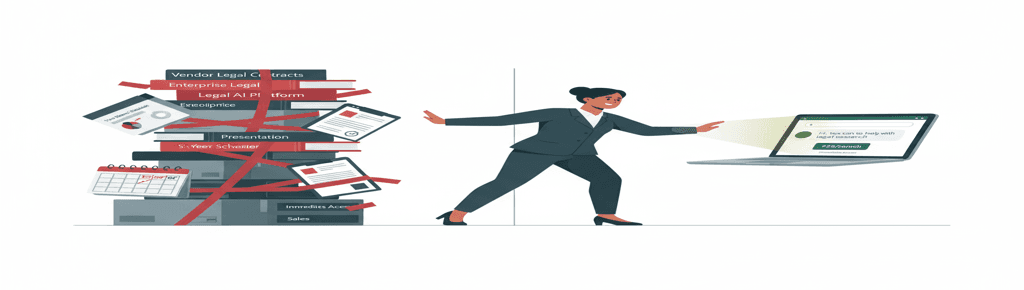
Stop waiting for the perfect legal AI tool. Most of what you do doesn't need one.
The Contract Trap
Legal AI vendors want you to believe general AI tools can't handle legal work. That you need their specialized platform with verified citations and jurisdiction-specific training. That ChatGPT or Claude will give you garbage if you try to use them for actual legal work.
Here's what they don't tell you: Most of what you do all day has nothing to do with case law research.
And here's the bigger problem: These vendors know if you try their product for 30 days without commitment, you might realize you don't need them. That's why they push year-long contracts. That's why the "free trial" is seven days - just long enough to get lost in onboarding, not long enough to actually see if it changes your practice.
You can't figure out if AI helps you in a week. You need months to experiment, fail, try different approaches, and see what actually sticks in your workflow.
What You Actually Do All Day
Let's be honest about your average Tuesday:
You're drafting client emails explaining why their case will take six months, not six weeks. You're reviewing contracts looking for problematic clauses. You're writing demand letters. You're prepping for depositions. You're explaining statute implications to clients who don't speak legalese. You're responding to discovery. You're outlining motions. You're strategizing with partners about case approach.
How much of that requires citation-checked case law from a legal-specific AI platform?
Almost none of it.
The stuff you do most - the daily grind that fills your billable hours - doesn't need Lexis+ AI or CoCounsel or Thomson Reuters' latest offering. It needs clear thinking, good writing, and attention to detail. ChatGPT and Claude handle that fine.
The real question isn't "Can general AI do legal work?"
The real question is "What percentage of MY work actually requires specialized legal AI?"
For most solo and small firm practitioners, the answer is: Less than you think.
Start Without Commitment
Here's what ChatGPT and Claude give you that legal AI vendors don't:
Zero commitment. No contract. No sales call. No negotiation. Open it and start using it today.
Cheap experimentation. Free tiers let you test for months. If you hit limits and want more, it's $20/month you can cancel anytime. Not a procurement process.
Time to figure it out. You need months to learn what questions to ask, what works for your practice, what's actually useful versus what sounded good in a demo. General AI tools let you take that time.
Real workflow integration. You can't figure out if AI changes your practice by using it in a vacuum for seven days. You need to try it on real client work, real deadlines, real problems. That takes time and repetition.
Think about it: Would you sign a year lease on a car before you learned to drive? No. You'd rent something cheap, practice in parking lots, figure out if you even like driving. Same logic applies here.
When Legal AI Actually Matters
Let's be clear: Legal-specific AI tools have advantages.
If you're doing heavy research that requires citation-checked cases with shepardization, jurisdiction-specific analysis, and verified authority - yeah, legal AI tools are built for that. If your practice is research-heavy appellate work or complex motion practice where every citation needs to be bulletproof, those tools earn their cost.
But that's not where you START. That's not how you figure out if AI helps you practice law.
You start by using AI for the stuff you do every day. If it works - if it actually saves you time and improves your work - THEN you can evaluate whether you need specialized tools for specific use cases.
And here's the thing: You might discover the general tools handle everything you need. Or you might discover you need legal AI for 10% of your work and general AI for the other 90%. Either way, you'll know because you actually used it, not because a sales rep told you that you need it.
Do This Today
Stop debating whether AI is worth exploring. Stop waiting for your firm to buy a legal AI platform. Stop thinking you need specialized tools before you can start.
But first: Set up privacy correctly. Before you paste any client information into AI, read this guide on protecting your data when using AI. It takes 5 minutes and solves the privacy concerns that stop most lawyers from starting.
And upgrade immediately. Use a paid plan, even the cheapest tier. Free versions are more likely to train on your data. Paid plans give you privacy controls - but you need to configure them correctly. That's what the linked guide covers. It's $20/month - less than you spend on legal research you don't use. Not a debate.
Now open ChatGPT or Claude. Pick something you're actually working on today - a client email, a contract review, a motion outline. Ask AI to help you draft it.
You'll know in 10 minutes whether this helps you more than any demo or trial period ever could.
If it doesn't help, you wasted 10 minutes and $20. If it does help, you just changed how you practice law - without signing anything, without waiting for anyone's permission.
That's how you figure out if AI matters for your practice. Not by reading about it. Not by attending webinars about it. By using it badly on real work until you figure out how to use it well.
The lawyers who are winning with AI right now aren't using specialized legal tools. They're using the same tools everyone else has access to. They just started trying stuff while everyone else was still reading vendor whitepapers and waiting for the perfect solution.
Built by lawyers, for lawyers.
LexpertAI delivers practical AI strategies that practicing attorneys can implement today. No theory, no fluff, just results.
Read our storyWant more practical AI guidance?
Get actionable tips and strategies delivered weekly. No theory, just real-world implementation.
Read The Playbook